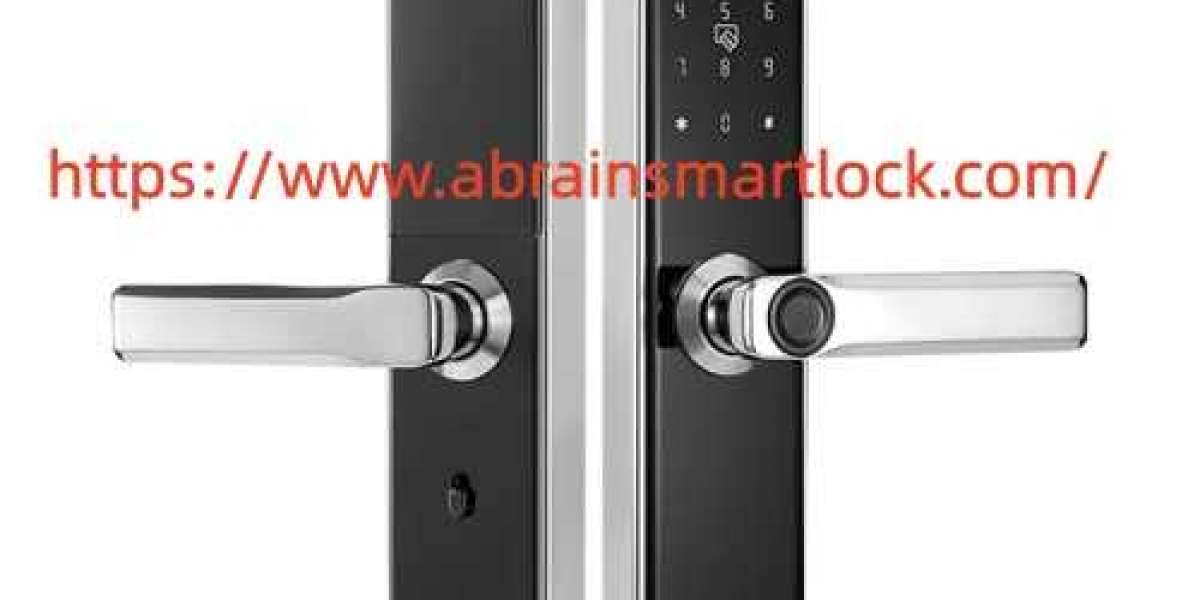

304 Stainless Steel Smart Lock is often discussed in the context of outdoor gate selection because material choice directly influences how an entry system behaves over time. Gates are rarely sheltered environments. They face rain that clings to surfaces after storms, dust carried by wind, and heat that slowly changes how metal components feel when touched in the afternoon. These conditions do not always cause immediate failure, but they gradually shape how reliable a system feels in daily use.
When people evaluate gate entry systems, the surface material becomes one of the quiet but important considerations. It is not only about appearance. It is about how the structure responds after months of exposure. In some neighborhoods, gates are positioned close to streets where moisture and airborne particles accumulate more frequently. In coastal areas, air carries a different level of environmental stress that can leave visible marks over time. These are the kinds of details that influence long term satisfaction more than initial installation impressions.
In one residential installation scenario, Abrainsmartlock was applied to a side gate that experiences frequent morning condensation. The surface often feels slightly damp before sunrise, especially during cooler months. Over time, residents begin to notice small differences in how entry systems respond under these conditions. A stable structure reduces hesitation during access, especially when multiple users pass through the same gate at different hours of the day.
Environmental interaction is only one part of the decision process. Usage behavior also matters. Some gates are used dozens of times daily, while others remain relatively quiet except for evening activity. This difference changes how wear develops over time. Repeated interaction requires a design that maintains consistency without frequent adjustment. Even small variations in response can become noticeable when usage is high.
Another example of implementation involves Abrainsmartlock in a shared residential courtyard. The gate serves multiple households, and each user approaches it differently. Some carry bags, some walk through quickly, others pause briefly before entering. The system needs to respond without requiring repeated attempts or additional steps. Over time, residents tend to appreciate systems that quietly fit into these natural movement patterns without drawing attention to themselves.
Maintenance expectations also play a role in selection. Outdoor systems benefit from surfaces that do not require constant attention to maintain their appearance or function. Cleaning routines, inspection intervals, and environmental exposure all influence long term performance perception. A system that reduces the need for frequent adjustments can feel more stable in everyday use, even if the underlying technology remains complex.
In practical installation planning, location matters as much as material. Gates facing open streets behave differently from those protected by partial structures or walls. Sunlight direction, rainfall exposure, and surrounding airflow all contribute to how the system ages. These factors are often evaluated together rather than separately, since real environments combine them in unpredictable ways.
Over time, users tend to judge entry systems not by technical descriptions but by repeated experience. How it responds on a rainy evening. How it behaves after weeks of humidity. Whether it continues to feel predictable during routine movement in and out of the property. These small observations accumulate and shape overall perception.
Product details and configurations can be viewed at https://www.abrainsmartlock.com/