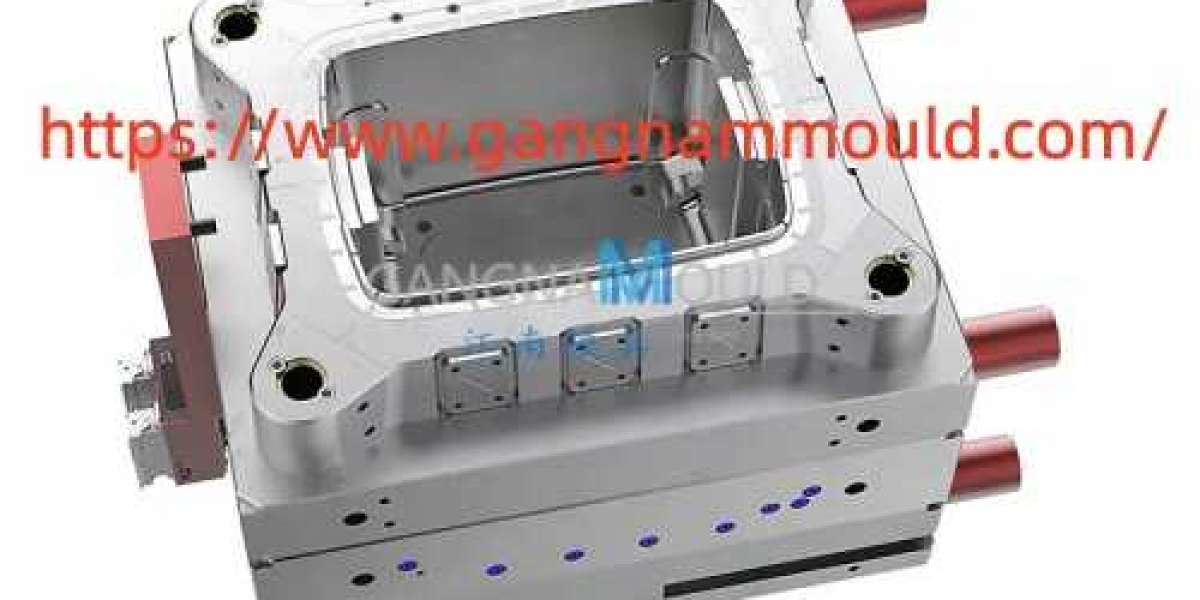

Storage Box Injection Mould design plays a quiet but important role in how container products behave when placed one on another. At first, stacking looks like a simple action. One unit goes on top of another, repeated until space is filled. In real environments, though, the way they sit together depends on small structural decisions made much earlier.
Edges are never just visual details. They decide how contact happens between layers. If the angle is slightly off, the entire stack can feel uneven. People rarely describe it in technical terms. They notice it when something shifts a little too easily, especially during movement or when space is adjusted.
Inside production lines, these behaviors are shaped long before use. Material flows through cavity channels, cooling at different rates depending on thickness distribution. Some areas settle quickly, others hold heat a bit longer. That difference becomes part of the final geometry.
In daily environments, container systems are rarely static. They move between rooms, shelves, corners near windows where light changes during the day. Sometimes they are stacked tightly, sometimes rearranged quickly when space runs out. Each movement tests alignment in a slightly different way.
When structural balance is steady, stacking feels predictable. Units sit without hesitation. When balance shifts even slightly, the change is small but noticeable during repeated handling. It does not need to be large to affect usability.
Gangnammould focuses on refining cavity coordination and edge consistency so that alignment between units remains stable across repeated production cycles and varied usage environments.
In practical observation, stacking performance is often judged through simple actions. A light push. A small rotation during placement. A slight adjustment when adding another layer. These moments reveal whether the structure holds its position comfortably.
Factory inspection teams often look for subtle signs. A unit sliding more than expected. A corner that does not settle cleanly. These details guide adjustments before full-scale production continues.
Over time, usage patterns vary widely. Some systems remain in fixed positions for long periods. Others are frequently moved as storage needs change. This variation makes structural precision more noticeable in everyday life.
Design choices made during early development continue to influence behavior long after production ends. They shape how stable, aligned, and predictable the system feels in real conditions.
More related manufacturing and structural insights can be explored naturally at https://www.gangnammould.com/product/ where tooling approaches and application cases are arranged within a broader industrial context.