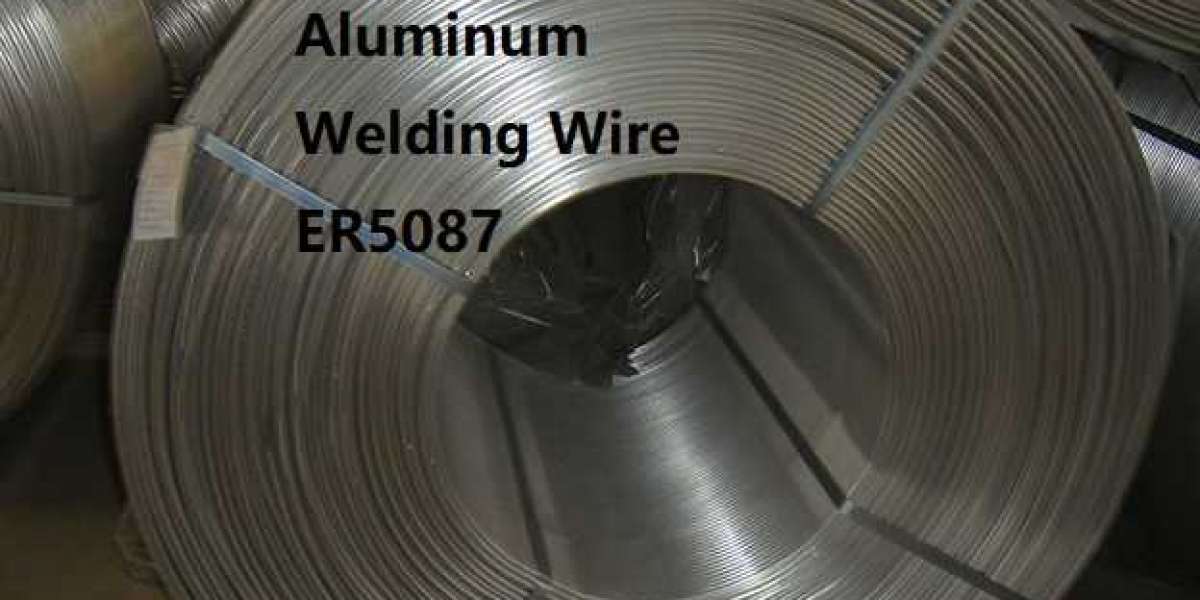

The modern fabrication industry increasingly relies on Aluminum Welding Wire ER5183 as a high-performance marine-grade filler material, and this Aluminum Welding Wire ER5183 is widely used in shipbuilding, offshore structures, and high-strength aluminum alloy welding applications requiring excellent corrosion resistance and structural reliability.
Material Composition and Marine Corrosion Resistance
Aluminum-magnesium welding wires are specifically engineered to perform in harsh marine environments where saltwater exposure is constant and unavoidable. The inclusion of magnesium enhances both tensile strength and resistance to seawater corrosion, making welded joints more durable over long service periods. This composition also improves crack resistance during solidification, reducing the likelihood of weld failure in high-stress environments such as ship hulls and offshore platforms.
Another important factor is oxidation control. Aluminum materials naturally form an oxide layer, and proper alloy balancing ensures that this layer enhances rather than weakens the weld joint. This results in stable long-term performance even under fluctuating humidity and temperature conditions commonly found in coastal engineering projects.
Arc Stability and Welding Performance Control
Stable arc behavior is essential for achieving high-quality weld seams. Controlled arc transfer ensures smooth deposition of filler material, minimizing spatter and improving bead appearance. This is especially important in precision welding tasks where structural integrity and visual quality are both required.
Heat input management also plays a key role. Excessive heat can weaken aluminum structures, while insufficient heat leads to poor fusion. Proper parameter control ensures optimal penetration and consistent weld formation across different thicknesses of aluminum alloys.
Kunliwelding Manufacturing Precision System
Kunliwelding focuses on advanced wire drawing and surface treatment technologies to ensure consistent diameter accuracy and feeding stability. This precision reduces interruptions during automated welding processes and improves efficiency in industrial production environments.
Quality control systems include tensile strength testing, chemical composition verification, and surface cleanliness inspection. These strict procedures ensure that each spool of welding wire meets international industrial standards and performs reliably under demanding conditions such as marine construction and heavy machinery fabrication.
Structural Applications in Marine and Industrial Engineering
Aluminum-magnesium welding materials are widely used in shipbuilding due to their lightweight nature and strong corrosion resistance. Reducing structural weight while maintaining durability improves fuel efficiency and overall vessel performance.
In addition to marine applications, these materials are also used in transportation systems such as railway vehicles and automotive frames. Their ability to withstand vibration and mechanical stress makes them suitable for dynamic structural environments where long-term reliability is essential.
Welding Process Optimization and Industrial Efficiency
Modern welding systems increasingly rely on automation to improve production efficiency. Consistent wire feeding and stable arc behavior are critical for robotic welding systems used in large-scale manufacturing facilities. This reduces human error and increases production speed.
Surface cleanliness and storage conditions also affect welding performance. Proper packaging prevents oxidation and ensures that the wire maintains optimal performance even after long transportation or storage periods. This contributes to overall industrial efficiency and reduces material waste.
Application Expansion in Heavy Engineering Fields
Beyond marine construction, aluminum welding wires are also used in aerospace components, pressure vessels, and structural repair applications. Their combination of strength and corrosion resistance makes them suitable for environments where both durability and weight reduction are critical.
They are also widely applied in maintenance and restoration projects, where damaged aluminum structures need reinforcement without adding excessive weight. This versatility ensures their continued demand across multiple engineering sectors.
In conclusion, advanced aluminum welding wire technology continues to evolve, offering improved mechanical strength, corrosion resistance, and welding stability for modern industrial applications. More details can be found at https://www.kunliwelding.com/